



Community Wellness has classes, resources and programs for the entire MIT community.
Connect with MIT Office of Sustainability


Massachusetts Institute of Technology
77 Massachusetts Avenue, E38-346
Cambridge, MA 02139
Learn more about MIT's climate work
The challenges of sustainability are both local and global. Creating transformative solutions requires deep collaboration among community leaders and members on campus, city and global scales.
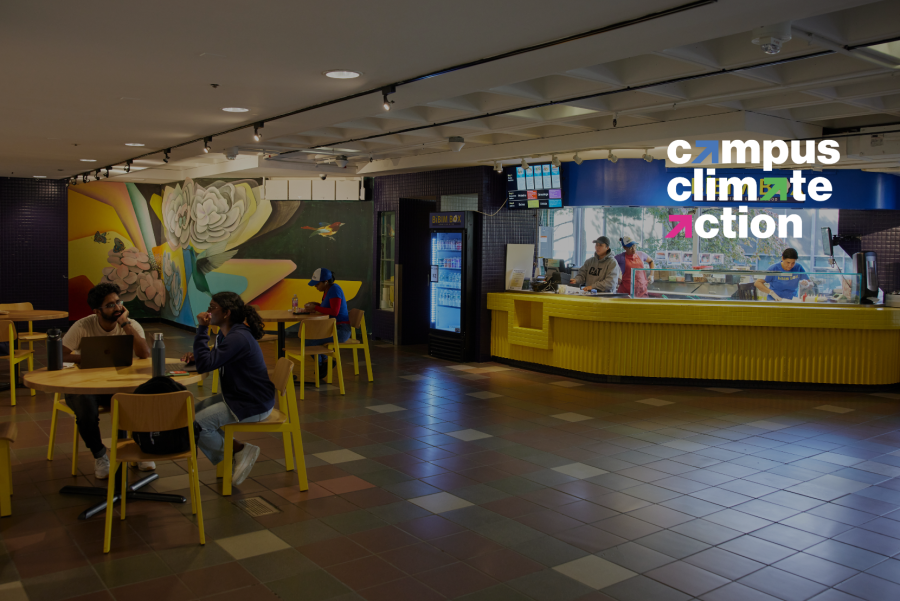
MIT is working to support a community where everyone has access to healthy, affordable, and culturally meaningful food in an environment designed for social connection, sustainability, and innovation.
Food production and consumption are connected to climate change and carbon emissions at every level. From tackling single-use disposable items, to providing more delicious plant-based options, to partnering with local food justice organizations, MIT is engaging the campus to meet its quantitative climate goals and support healthy communities.
Building on the momentum of our fall Fresh Food Bag program, MIT Farm, MITOS, and MIT Anthropology are piloting our first-ever 10-week Summer CSA (Community Supported Agriculture) program at MIT in partnership with the New Entry Sustainable Farming Project.
A sustainable food system also addresses the social, racial, economic, and environmental injustices embedded in food and farming. When solving for carbon and waste reductions, a sustainable food system also ensures access to affordable and culturally meaningful food, agricultural land, business opportunities, and safe working environments for all.
The Hive Garden on the Saxon Lawn is made up of pollinator-attracting plants, bringing awareness to the crucial role that bees, butterflies, birds, beetles, moths, and others play in sustaining our economies, food security, and environmental health.
In addition to the main Hive Garden, the MIT campus is also home to a growing number of Mini Hive Pollinator Gardens. These container gardens found outside of multiple dorms have been planted in partnership with UA Sustain, the MIT Office of Sustainability, Burton-Conner, MacGregor House, the Native American Students Association, and GSC Sustain. The Mini Hives across MIT will provide a pathway of native pollinator plants at the intersection of sustainability and Traditional Knowledge.
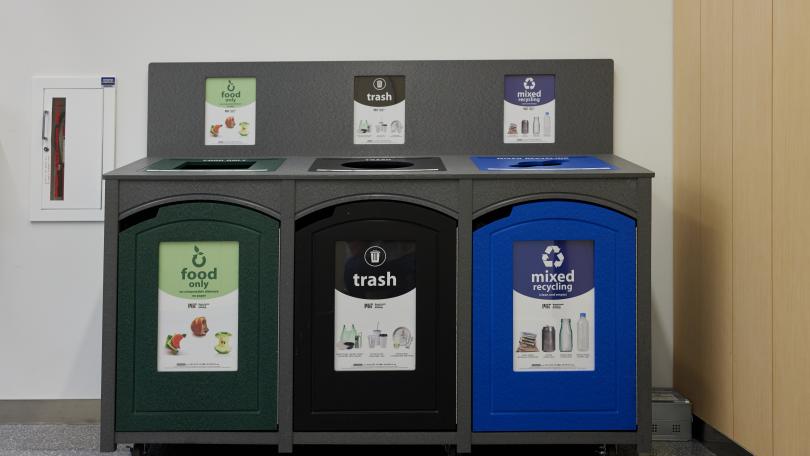
Preventing food from entering the trash stream is one of the most effective changes people can make to fight climate change because it makes an enormous impact on greenhouse gas emissions. Learn more about how MIT is working to stop food waste from entering our landfills by using centralized bins systems, helping community members make sustainable choices when hosting events, and more.
Community Wellness has classes, resources and programs for the entire MIT community.
During the spring, summer, and fall, the City of Cambridge supports farmers markets. Several markets throughout the year also accept EBT/SNAP.
In Somerville, the Somerville Winter Farmers’ Market (December-April) accepts SNAP/ EBT and HIP (Healthy Incentives Program). The Union Square Farmers’ Market in Somerville (May-November) also SNAP/EBT/Food Stamps, and several vendors also accept WIC and Elder Coupons.
Boston also has many farmers markets that are available throughout the week.

