




MIT News Office
|
How an influx of salt may affect microbial ecosystems
As sea levels rise and saltwater seeps into freshwater, stressed aquatic populations may retain overall growth even as diversity declines, MIT scientists find.

MIT News Office
|
For energy systems that power a reliable grid, the future is all about location
MIT researchers find that where new energy projects are built could be key to avoiding blackouts in a future with hotter weather and other challenges.

MIT News Office
|
3D-printed bridge points the way to greener construction
MIT researchers developed a framework that folds a printer’s real-world limits into the optimization, while revealing that better hardware could sharply reduce material use.

MIT News Office
|
MIT-led project opens first climate shelter in Bangladesh
The Jameel Observatory-CREWSnet project opens a solar-powered “adaptation fortress” in Satkhira, a region facing severe and growing climate threats.

MIT News Office
|
Hydrogen: clean fuel of the future — if we can find a cheap and clean way to ship it
A team led by MIT Energy Initiative researchers developed the HyCAT tool, enabling decision-makers to explore the cost and carbon emissions of their options for shipping hydrogen fuel to their site.

MIT News Office
|
How urban design leads to better wellness
An extensive study of U.S. cities identifies walkable neighborhoods, urban greenery, and access to amenities as key contributors to residents’ health.
MIT News Office
|
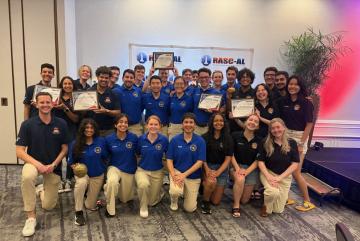
MIT student teams win top honors in NASA competition
Three MIT teams took five top awards in the 2026 NASA RASC-AL Competition for designing critical elements for the moon base and future missions to Mars.

MIT News Office
|
MIT researchers advance toward greater bandwidth, more energy-efficient communications
The FUTUR-IC research program integrates electronics and photonics in microchip systems.

MIT News Office
|
Scientists find ozone depletion began decades before discovery of ozone hole
Using modern tools, they also determined that carbon tetrachloride, used as a dry-cleaning and degreasing agent as early as the 1930s, was at the root of early ozone loss.