



MIT News Office
|
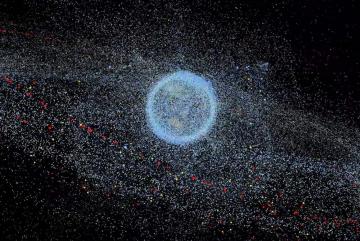
MIT ARCLab announces winners of inaugural Prize for AI Innovation in Space
The challenge asked teams to develop AI algorithms to track and predict satellites’ patterns of life in orbit using passively collected data

MIT News Office
|
Study: Weaker ocean circulation could enhance CO2 buildup in the atmosphere
New findings challenge current thinking on the ocean’s role in storing carbon.

MIT News Office
|
“They can see themselves shaping the world they live in”
Developed by MIT RAISE, the Day of AI curriculum empowers K-12 students to collaborate on local and global challenges using AI.

MIT News Office
|
How to increase the rate of plastics recycling
A national bottle deposit fee could make a dramatic difference in reducing plastic waste, MIT researchers report.

MIT News Office
|
Pioneering the future of materials extraction
MIT spinout SiTration looks to disrupt industries with a revolutionary process for recovering and extracting critical materials.

MIT News Office
|
Two MIT films nominated for New England Emmy Awards
Films produced by MIT Video Productions and the Department of Mechanical Engineering highlight some of MIT’s global conversations about the environment and climate change.

MIT News Office
|
Startup aims to transform the power grid with superconducting transmission lines
VEIR, founded by alumnus Tim Heidel, has developed technology that can move more power over long distances, with the same footprint as traditional lines.

MIT News Office
|
Making climate models relevant for local decision-makers
A new downscaling method leverages machine learning to speed up climate model simulations at finer resolutions, making them usable on local levels.
MIT News Office
|
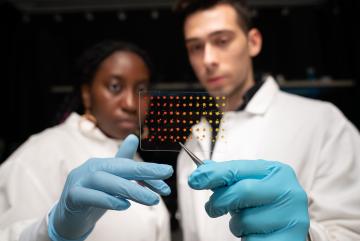
New computer vision method helps speed up screening of electronic materials
The technique characterizes a material’s electronic properties 85 times faster than conventional methods.