



MIT News Office
|
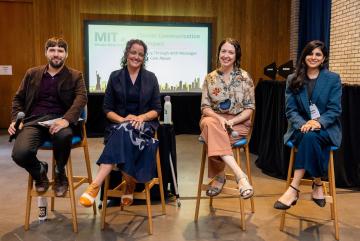
At New York Climate Week 2026, MIT connects with a global network
A cross-section of the MIT community convened discussions on topics ranging from data centers and super pollutants to agriculture and education.
MIT News Office
|
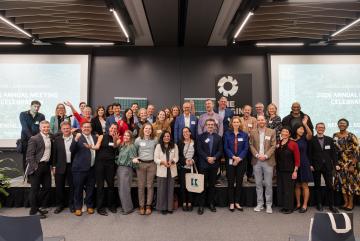
Fostering community amid Kendall Square’s innovation
The 18th annual Kendall Square Association Annual Meeting explored how new technologies could be a force for shared prosperity in society.
MIT News Office
|
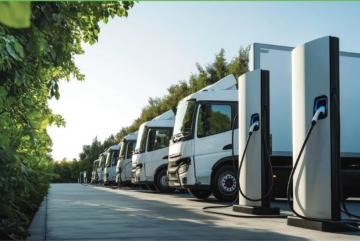
State of Supply Chain Sustainability Report finds corporate commitment at record high, but governance lags behind
MIT's Center for Transportation and Logistics finds sustainability commitments are strong, but governance gaps and external disruptions prevent execution.
MIT News Office
|
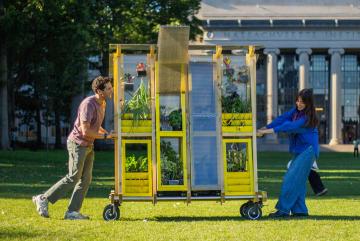
MIT Farm is growing
Co-founders Aleks Banaś and Zachary Rapaport see architecture and farming as deeply complementary disciplines. Their nascent club is having a sizeable impact at the Institute.
MIT News Office
|
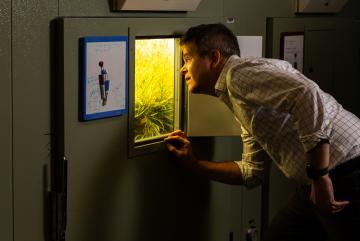
Exploring how plants thrive in a changing environment
Associate Professor David Des Marais studies how plants interact with their surroundings and adapt over time.
MIT News Office
|
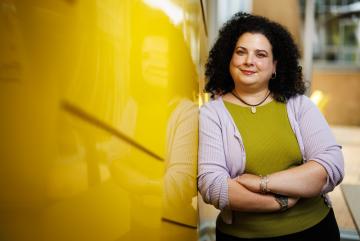
Using AI to mitigate the growing environmental threat of data centers
By rethinking how large cloud computing systems operate, Associate Professor Christina Delimitrou seeks to make data centers more energy efficient.
MIT News Office
|
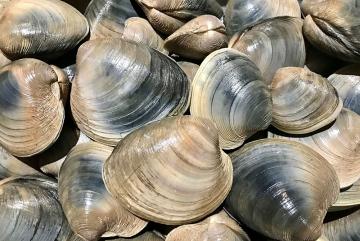
Turning the tide on Massachusetts shellfishing data
MIT researchers built a cloud-based platform to help Massachusetts coastal towns and the state manage shellfishing closures, giving thousands of permit holders a clearer view of where they can fish.

MIT News Office
|
Climate Action Learning Lab bridges research and policy for effective climate solutions
J-PAL North America’s Learning Lab supported a second cohort of U.S. government and nonprofit organizations in building and using rigorous evidence to advance effective decarbonization and adaptation strategies.
MIT News Office
|
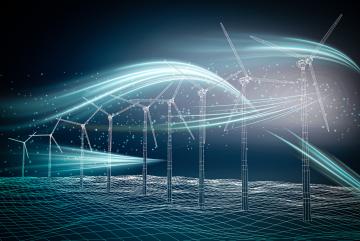
Pressurized experiments could help wind farms generate more power
A new way of simulating wind turbines in the field shows how tweaking turbine operation could unlock tens of thousands of dollars per turbine every year.