



News
Sustainability Connect 2026: Advancing Climate Action Through Collaboration
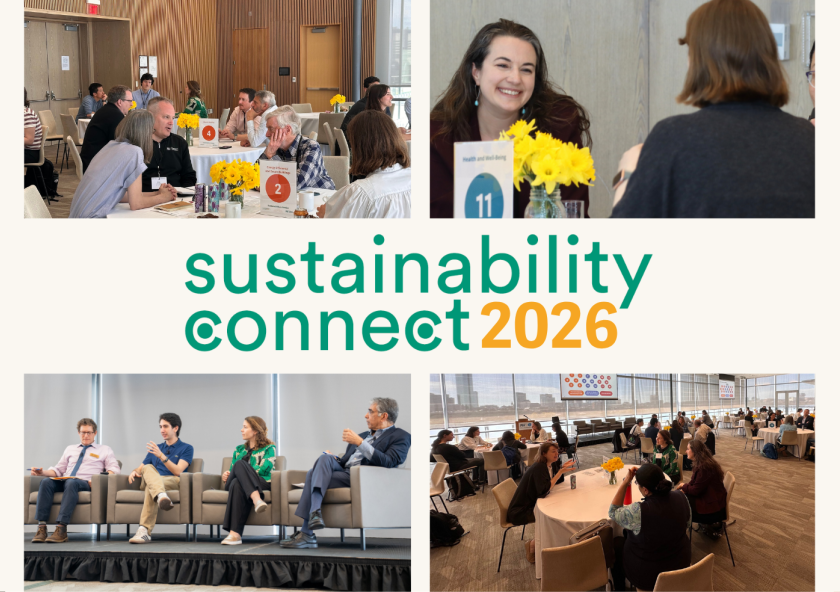
How do universities, cities, and communities work together to accelerate climate solutions? How can we better connect research, operations, education, and community partnerships to drive meaningful progress? These questions guided Sustainability Connect 2026, MIT’s annual gathering hosted by the Office of Sustainability.
The event brought together members of the MIT community working across climate and sustainability efforts throughout the Institute. Participants represented a wide range of roles spanning campus operations, research labs, academic programs, and administrative units, reflecting the collaborative foundation of MIT’s climate work.
The day opened with remarks from Julie Newman, Director of Sustainability, who welcomed participants and emphasized the importance of cross-disciplinary collaboration in addressing complex sustainability challenges. She highlighted the breadth of engagement across the MIT community, emphasizing the essential role of staff advancing MIT's sustainability goals in partnership with students, researchers, and faculty across disciplines and departments.
A featured conversation on city-scale climate action brought together Joe Higgins, Vice President for Campus Services and Stewardship, and Dennis Carlberg, Chief Sustainability Officer at Boston University. Carlberg invoked the idea that “if you can’t solve a problem, make it bigger,” emphasizing the power of collaboration to unlock solutions that cannot be achieved in isolation. The discussion highlighted the recently announced thermal energy network study led by the Boston Green Ribbon Commission and funded by MassCEC and the City of Boston, in which MIT, Boston University, and other anchor institutions are key participants. The study is exploring how shared thermal infrastructure could reduce reliance on natural gas for heating and cooling across campuses and surrounding communities.
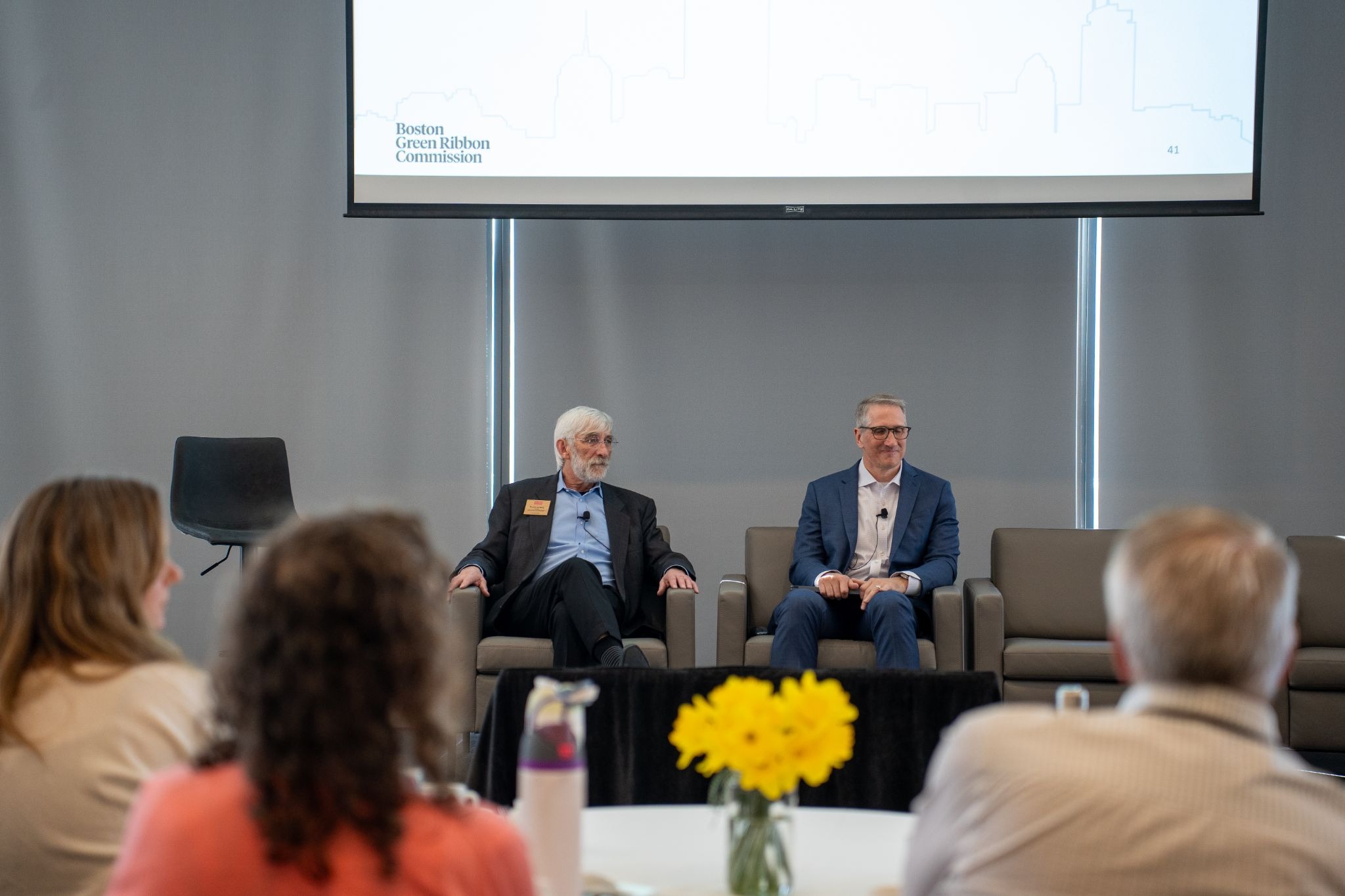
Dennis Carlberg (AVP Climate & Chief Sustainability Officer, Boston University) and Joe Higgins (Vice President for Campus Services and Stewardship, MIT) discuss city-scale climate collaboration for climate solutions.
At MIT, some of the most effective climate and sustainability work can look spontaneous—but, as Newman noted in opening remarks for the campus-scale partnerships panel, it is built on long-standing relationships across the Institute. She emphasized the importance of relationships over structure, where connections between people and groups form the foundation of progress and formal systems exist to support them. Clear priorities, she added, help ensure focus and transparency in what the Institute chooses to pursue.
Panelists brought these ideas to life through examples. Ana Pantelic, Executive Director of D-Lab, shared D-Lab’s approach to partnership-building through a co-design toolkit that helps teams move from informal collaboration to intentional design. Amitava “Babi” Mitra, Executive Director of NEET, described a student-led rapid prototyping project that designed and installed a solar-powered charging station on campus, requiring coordination across more than a dozen administrative units and external partners to navigate permitting, safety, and operational requirements. He emphasized how projects like this give students direct experience working through real institutional constraints, collaboration, and implementation challenges.
Mateo Pisinger, a graduate student in Nuclear Science and Engineering, highlighted his leadership of the Student Sustainability Coalition (SSC), which helps coordinate student sustainability groups. He also reflected on a student-developed MIT Climate Ecosystem Map that SSC continues to support, which helps students navigate the breadth of sustainability activity on campus.
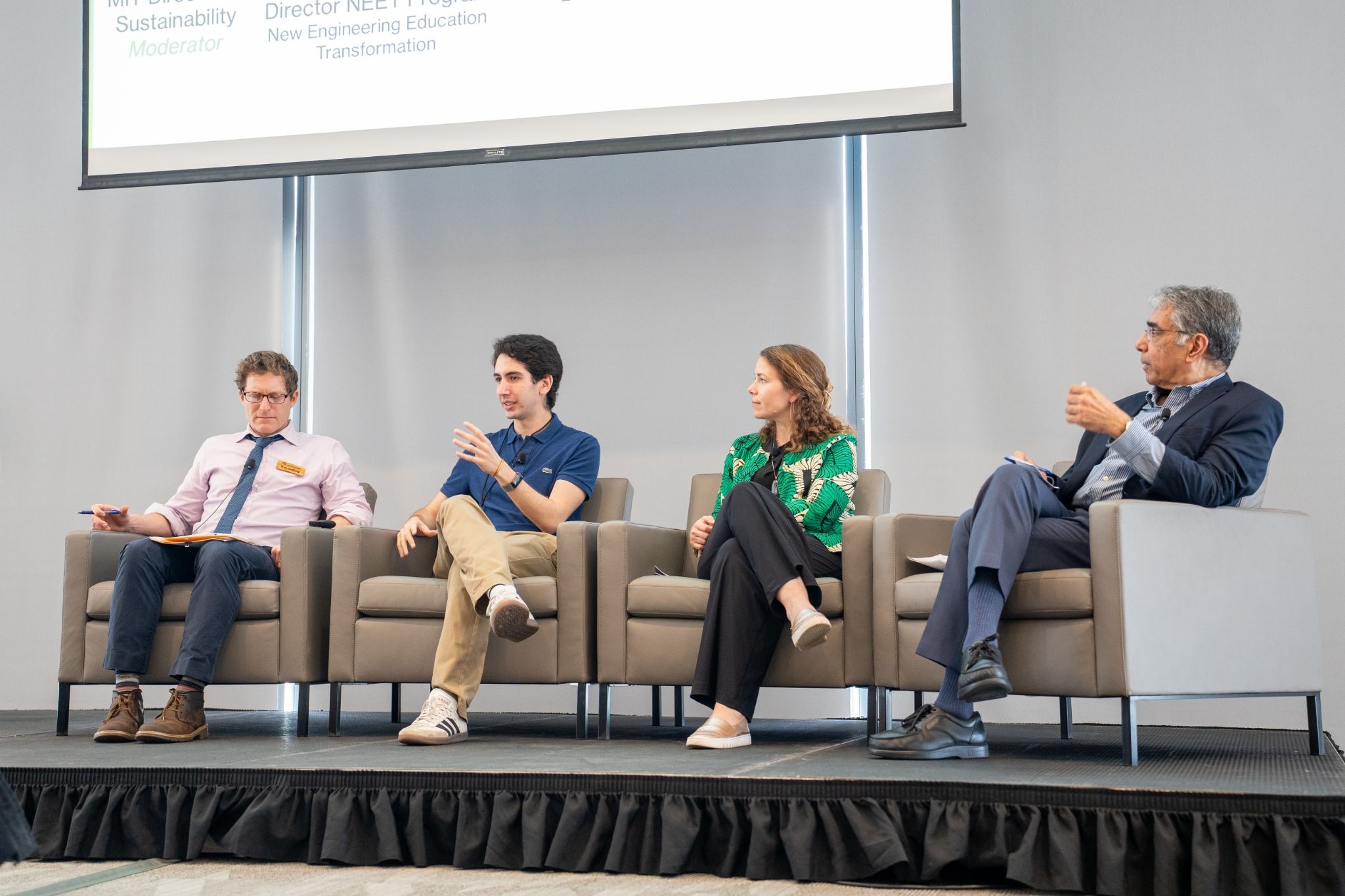
Brian Goldberg (Assistant Director, MIT Office of Sustainability), Mateo Pisinger (Student Sustainability Coalition), Ana Pantelic (D-Lab), and Amitava Mitra (NEET) discuss how relationships and intentional coordination across MIT's administrative units, labs, and student groups drive sustainability progress on campus.
After a short break, the program continued with Sustainability in Motion, an interactive session where participants explored MIT’s climate and sustainability ecosystem across 18 themed tables. The session was designed to surface connections across disciplines and roles, bringing together faculty, students, researchers, and staff to engage directly with ongoing work across campus. Tables were organized around themes spanning infrastructure transformation, healthy people and ecosystems, and scaling impact. Each table focused on facilitated conversation rather than presentation, with participants rotating through three rounds to surface challenges, share ongoing work, and identify opportunities for collaboration. Across the discussions, participants surfaced recurring themes of collaboration, coordination, and shared infrastructure in advancing sustainability work at MIT.
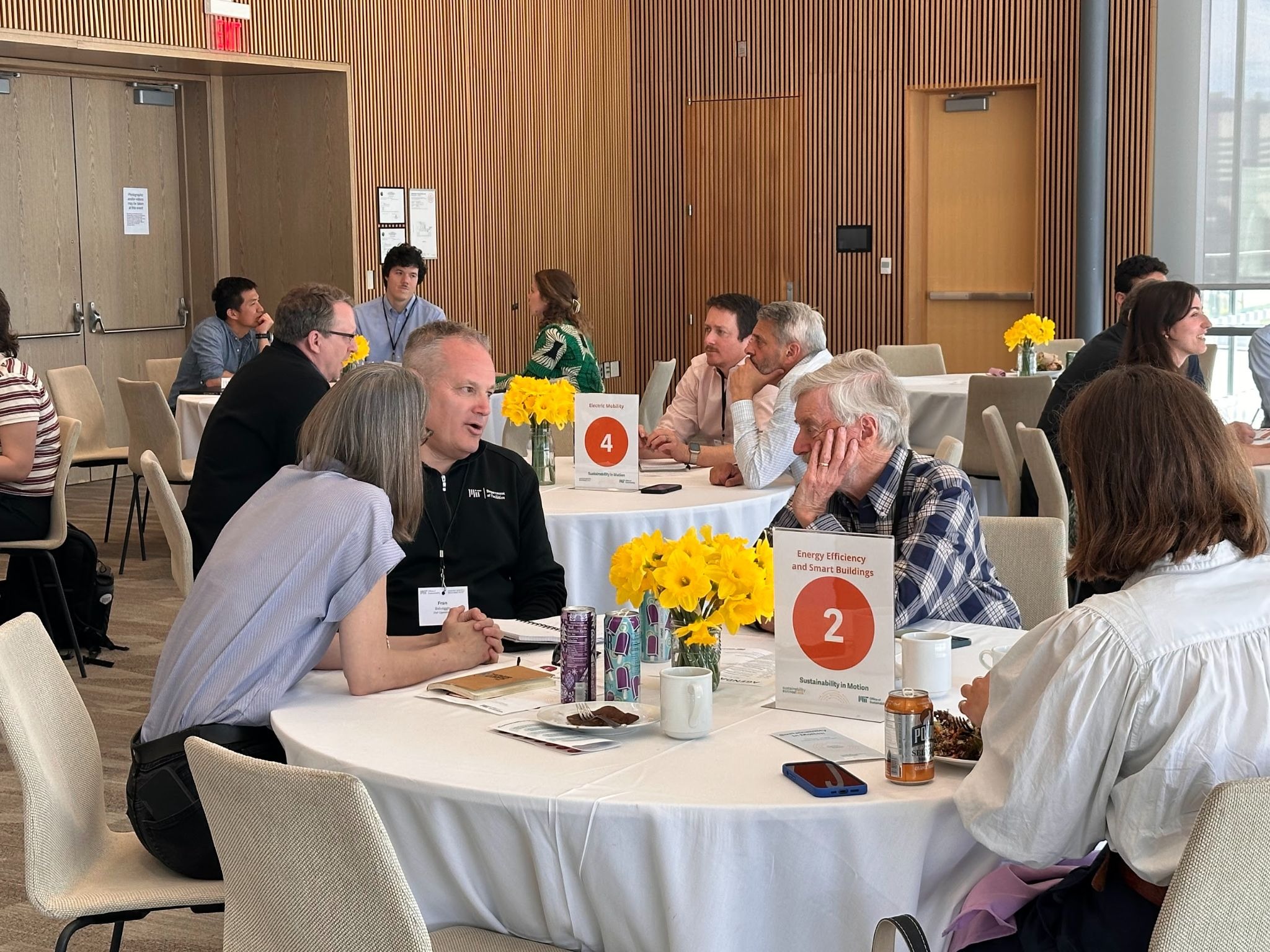
Participants engage in facilitated conversations across 18 themed tables during Sustainability in Motion, surfacing connections and collaboration opportunities across MIT's climate and sustainability ecosystem. In the foreground, Fran Selvaggio (Senior Engineer, Building Management System, MIT Facilities) and Les Norford (Professor, Architecture) host a discussion on Energy Efficiency and Smart Buildings—exemplifying how the campus serves as a testbed for sustainability innovation
The afternoon panel on community partnerships for climate education and action brought together Rochelle Griffith (Year 2, Civil and Environmental Engineering), Greta Lawler (Year 3, Urban Studies and Planning), Joel Voldman (Electrical Engineering & Computer Science), and Drew Kane (City of Cambridge), moderated by Vippy Yee (Assistant Dean for Community Based Programs, PKG Center for Social Impact). The discussion centered on what it means to build mutually beneficial partnerships between universities and community partners, and how those relationships are developed and sustained over time.
Panelists reflected on how value is created on both sides of these collaborations, including student learning and skill development and real-time contributions to city sustainability work. Examples included MIT-Cambridge heat sensor deployments, where students contribute to active municipal efforts while gaining hands-on experience. The conversation highlighted the role of the campus as a testbed for applied learning and emphasized how education, research, and community partnerships can reinforce one another.
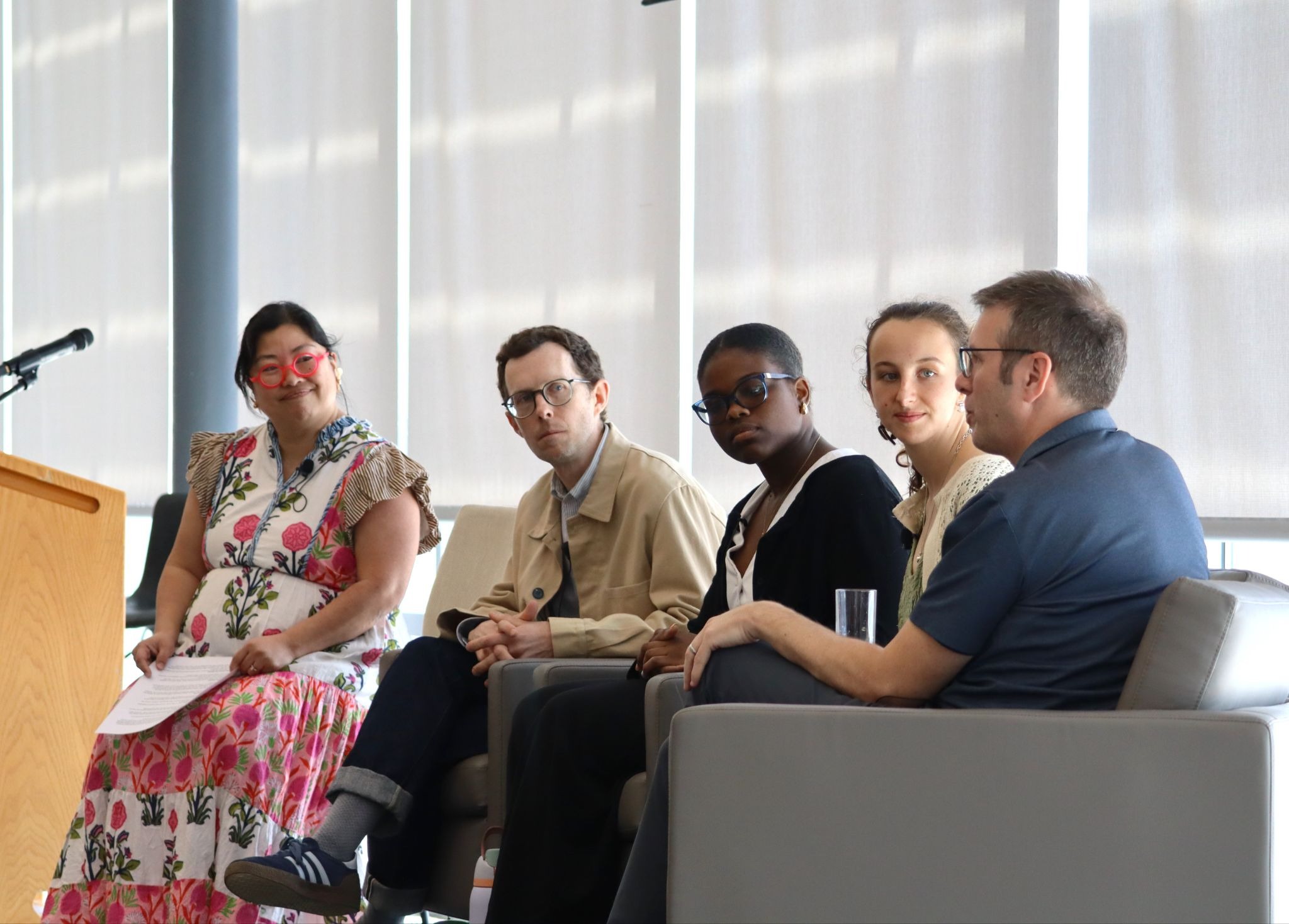
The afternoon panel explored building mutually beneficial university-community partnerships and the role of long-term collaboration in advancing climate solutions and student learning. Pictured are Vippy Yee (Assistant Dean for Community Based Programs, PKG Center for Social Impact), Drew Kane (Acting Director of Community Planning & Design Division, City of Cambridge Community Development Department), Rochelle Griffith (Year 2, Civil and Environmental Engineering), Greta Lawler (Year 3, Urban Studies and Planning), and Joel Voldman (William R. Brody (1965) Professor, Electrical Engineering)
Sustainability Connect 2026 underscored the value of bringing together people across disciplines, roles, and institutions to turn shared knowledge into coordinated climate action. The event highlighted MIT’s vibrant and growing sustainability ecosystem, where collaboration across operational, research, and educational boundaries drives progress.