



Thought Leadership
Infinite Gowns Pilot at MIT’s 2026 Graduation
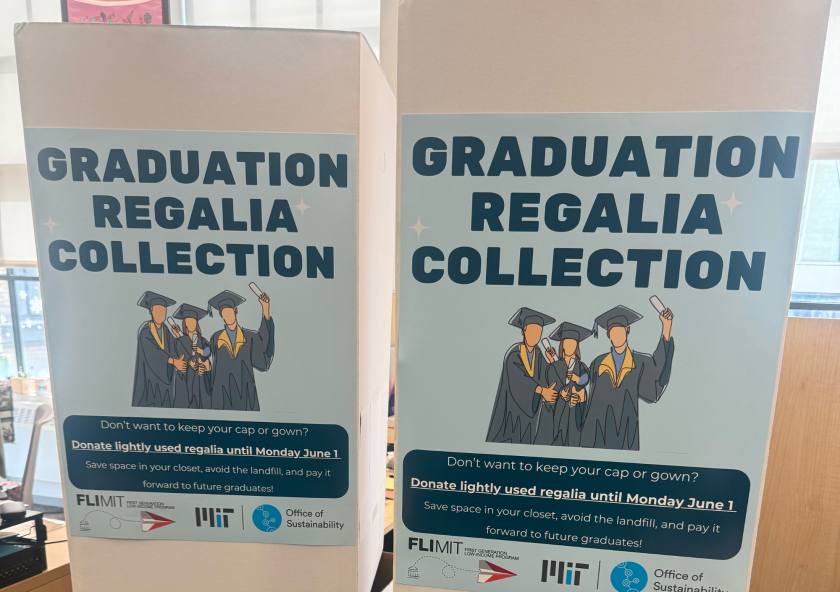
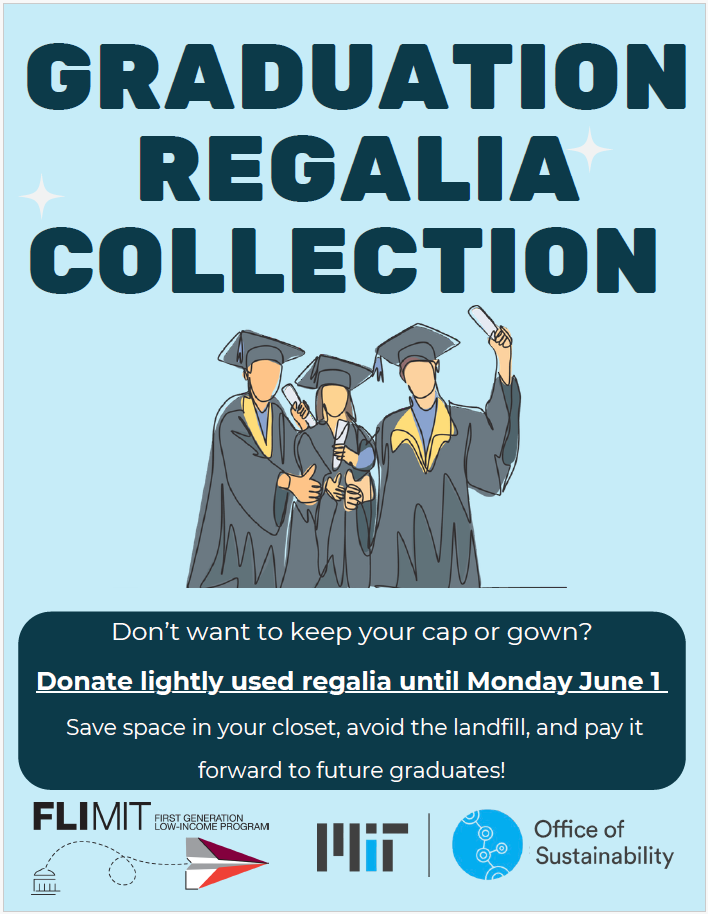
Every year, millions of polyester graduation gowns end up in landfills after being worn for only a few hours, a practice that creates both unnecessary waste and expense. During my time with the MIT Office of Sustainability, I saw an opportunity to address this challenge through a simple idea: collect regalia after MIT Commencement and make it available to future students through a campus reuse program.
Strength in Partnership
In my capacity as a research assistant with the Office of Sustainability this year, I worked to develop and launch the Infinite Gowns Pilot, bringing together partners across MIT to turn that idea into reality. While I helped coordinate the program and build the partnerships needed to get it off the ground, its success was made possible by the many groups that contributed their time, resources, and enthusiasm. In particular, MIT's First Generation and/or Low Income (FLI) program embraced the initiative from the beginning. FLI served as a key partner by helping champion collection efforts and establishing a pathway for future storage, management, and distribution of regalia to students who can benefit from it most.
The pilot also built on relationships formed through MIT's Move Out Donation Program, another waste diversion initiative launched this year. Working with MIT Facilities, residence hall staff, academic departments, and campus offices, we established nine collection locations across campus. Collection sites included the Undergraduate Advising Center, the Department of Civil and Environmental Engineering, the Department of Architecture, and several residence halls. The willingness of these partners to support the program made it accessible for graduates to participate and demonstrated a shared commitment to reducing waste across campus.
Measuring Our Impact
The results from the first year exceeded my expectations. Following Commencement, we collected 78 gowns and 49 caps in good condition, suitable for immediate reuse. Only a small number of donations could not be accepted due to damage or extensive personalization. Based on current regalia costs, these donations represent an estimated $2,650 to $4,200 in future savings for MIT students.
One of the most exciting aspects of this project is that it creates benefits far beyond a single graduation season. By keeping regalia in circulation, the program diverted an estimated 130 pounds of material from the waste stream and avoided approximately 180 kilograms of carbon dioxide-equivalent emissions for a single reuse. More importantly, it demonstrates how relatively small interventions, when supported by strong partnerships, can create scalable models for lasting changes that reduce waste, save money, and make campus resources more accessible.
I am grateful to the students, staff, departments, and campus partners who helped bring the program to life, and I am excited and hopeful to see it continue to grow in the years ahead. With expanded participation and additional collection sites, Infinite Gowns has the potential to become a lasting tradition at MIT and a model for circularity on campus.
Future Outlook: What Lies Ahead
To complete the cycle of this reuse effort, the collected gowns will be distributed next spring to interested graduates within the FLI 2027 cohort. Looking ahead, expanding our partnerships will allow the initiative to grow through additional collection sites and extended dates. By recovering this first round of regalia alongside new collections after the 2027 commencement, we aim to steadily build and maintain a permanent inventory year after year. This sustained circular model will continuously eliminate the financial burden for students while driving down the emissions and waste associated with purchasing new garments.